


What are mood disorders?
Depression, bipolar disorder, and treatment-resistant depression require careful diagnosis, consistent treatment, and a provider who knows your unique needs.
How we treat mood disorders
We begin with a thorough assessment, then develop a plan together. We stick with you through every adjustment, every setback, and every step forward.

Comprehensive initial assessment
You and your provider will have a real conversation about your history, your symptoms, and what you want from care. This evaluation is critical to forming your treatment.

Personalized treatment planning
Based on your assessment, we create a treatment plan tailored to your needs. This might include medication, therapy, lifestyle changes, or advanced treatments like TMS.

Ongoing monitoring and adjustment
We check in regularly to see how you're responding to treatment. If something isn't working, we adjust your plan. Your progress matters, and we stay committed to your recovery.
Mood disorder treatment is powerful
Effective treatment can give back the parts of life that depression or bipolar disorder have taken from you.
Expert, consistent care
Our providers understand mood disorders deeply and treat every patient with dignity and respect. We create a space where you can be honest about what's happening without fear of being dismissed, minimized, or rushed.

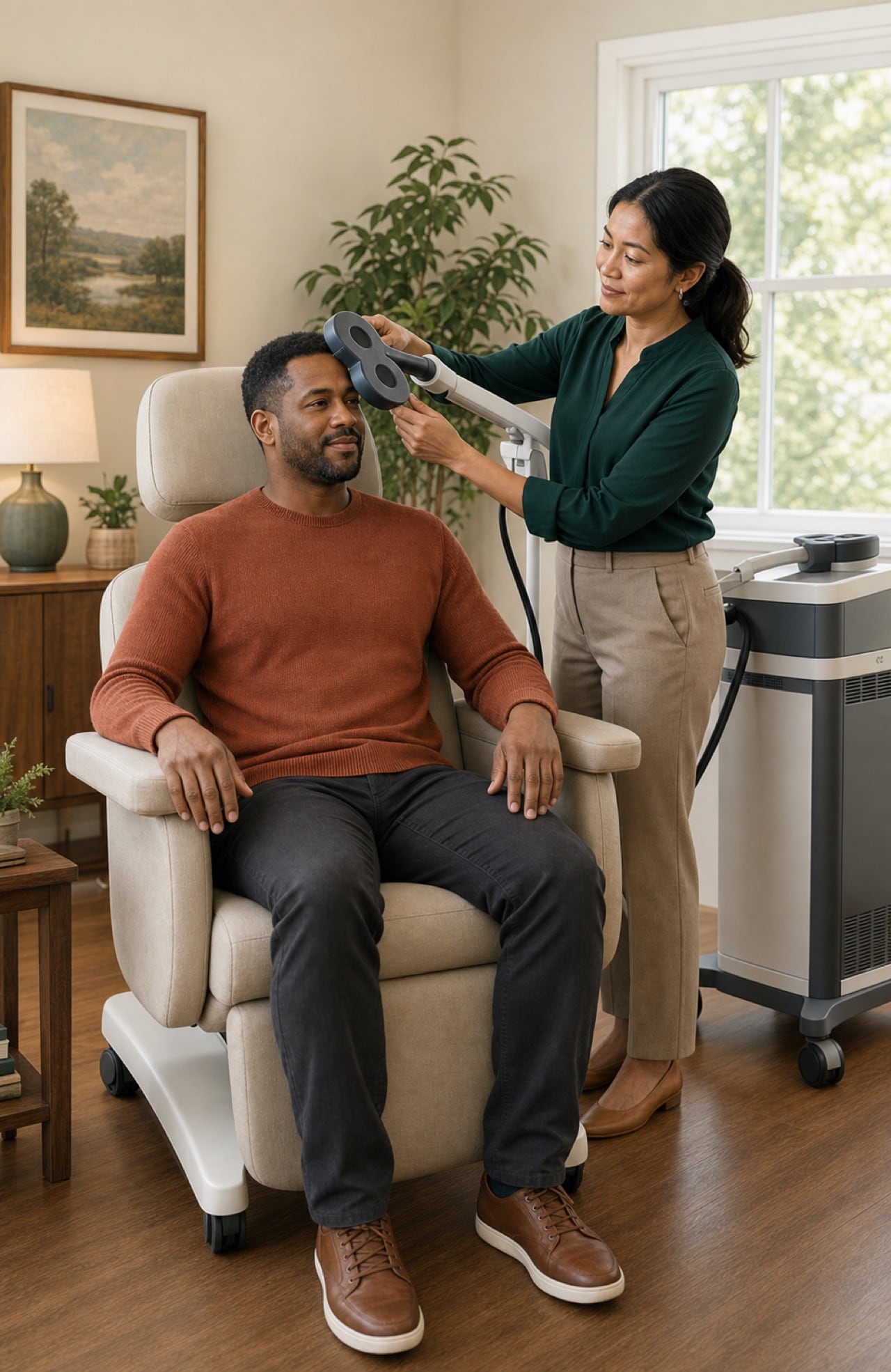
Advanced options when you need them
If standard treatments don't work, we offer FDA-approved alternative therapies such as TMS and Spravato.
Depression is more than sadness
It affects sleep, appetite, energy, concentration, relationships, and your ability to find meaning in daily life. Left untreated, it compounds. But with the right treatment, most people see real improvement.
What depression looks like
Persistent low mood, loss of interest in things you used to enjoy, changes in sleep or appetite, difficulty concentrating, low energy, and feelings of worthlessness that last weeks or longer.
These symptoms interfere with work, relationships, and the parts of life that matter.
If this sounds like you — or someone you love — you don't have to figure it out alone.

How we treat it
Medication management, therapy, and — when those haven't been enough — TMS and Spravato. We build your treatment plan around your history, your goals, and what's worked or not worked before. We don't restart from zero.

Bipolar disorder requires precision care
Bipolar disorder usually involves cycles of elevated and depressed moods that differ from typical emotional fluctuation. Accurate diagnosis matters here, and our providers have the experience to get it right.
Understanding the bipolar spectrum
Each type of bipolar disorder requires a different treatment approach.
Bipolar I involves full manic episodes — dramatically decreased need for sleep, elevated or irritable mood, impulsive behavior.
Bipolar II features hypomanic episodes alternating with depressive periods.
Cyclothymia presents milder but persistent mood fluctuations.

Recognizing bipolar patterns
Elevated periods may include increased energy, impulsive decisions, or decreased sleep. Depressive phases bring withdrawal, hopelessness, and fatigue. Recognizing these patterns helps us intervene early and prevent crisis.

Building long-term stability
Medication is often the foundation of bipolar treatment, paired with therapy and lifestyle strategies. We monitor your progress closely and adjust your plan to maintain balance and prevent relapse.

When you need a different approach
Treatment-resistant depression affects roughly one in three people with depression. If you are among them, don't lose hope. Emerald Psychiatry offers TMS and Spravato, therapies that have helped many patients who had stopped believing things could get better.
What is treatment-resistant depression?
Treatment-resistant depression occurs when two or more antidepressants at adequate doses fail to produce significant improvement. It affects roughly one-third of people with depression and requires specialized intervention.

Advanced treatments that work
TMS uses magnetic pulses to stimulate brain regions involved in mood regulation. Spravato is a nasal spray that works through a different mechanism, offering rapid relief for some patients.

Recovery is within reach
Many patients experience significant improvement with TMS or Spravato after years of struggling. These treatments open new possibilities and restore the belief that recovery is possible.

Ready to get started?
Schedule an appointment today or reach out with questions. We're here to help you take the next step.

FAQ
Common questions about getting started with Emerald Psychiatry
Through a clinical interview — a real conversation about your symptoms, how long they've lasted, and how they affect your day-to-day life. We may use validated screening tools and recommend bloodwork to rule out medical causes like thyroid problems.
Yes. Effectively. Many people with bipolar disorder achieve long periods of stability and live full, meaningful lives with the right combination of medication, therapy, and support. The key is accurate diagnosis and consistent care. We provide both.
Depression that persists despite trying at least two antidepressants at adequate doses for adequate periods. It affects about one in three people with depression. TMS and Spravato have strong evidence for this population — and we specialize in both.
It varies. Some patients feel meaningfully better within weeks of finding the right medication. Others need longer. Therapy builds skills over time. We work at your pace — and we don't discharge you because you didn't get better fast enough.
Many people benefit from both. Medication addresses brain chemistry; therapy changes patterns and builds skills. The right combination depends on your specific situation. We tailor and adjust as we go.